Team

Ted Robertson specializes in designing the optimal mix of human + AI decision-making to improve health outcomes. Has launched the first behavioral science design teams embedded in government and healthcare and helped co-found the Coalition for Healthcare AI to develop guidelines for effective healthcare AI.
Background::
- Chief Operating Officer at Knit Health
- Former Managing Director at ideas42
- Former Visiting Scholar, Harvard Kennedy School of Government
Jonathan Kolstad studies how health care markets actually work, focusing on how people make decisions with limited information and how AI and behavioral economics can be used to improve outcomes. His research spans topics from how patients choose doctors, to how doctors make decisions, to how insurance design influences health spending.
Background:
- ASHEcon Medal (2018): top health economist under 40
- Co-founder and former Chief Data Scientist at Picwell, Chief Operating Officer Knit Health
- PhD, Harvard
Noah’s primary interests are in machine learning model robustness, interpretability, and applications of modern large scale models to structured prediction problems. Prior to joining CHMI, Noah worked as a researcher at Johns Hopkins University and Stony Brook University, where he conducted research in machine learning, language understanding, and causality.

Faculty
Ziad Obermeyer designs and builds algorithms to reshape health care, most recently better identification and action around low value and high value cardiac care. He has also focused on creating new datasets that can drive healthcare research for the larger medical research community, or for pioneering effective AI governance, including his groundbreaking 2019 Science paper that revealed that a widely-used algorithm affecting millions of patients exhibited significant racial bias.
Background:
- Co-founder, Dandelion Health
- Co-founder Nightingale Open Science
- MD, Harvard

Maya Petersen develops machine learning and statistical methods to answer causal questions in health and determine not just what happens, but why, and what we should do about it. Her methodological innovations help researchers design better studies and draw more reliable conclusions from complex data.
Background:
- Co-Director, Berkeley’s Center for Computational Precision Health
- Co-Director, Berkeley's Center for Targeted Machine Learning and Causal Inference
- MD, UCSF, and PhD, University of California, Berkeley
Ben Handel studies how real people make health insurance decisions and how those decisions differ from what traditional economic models predict. His research reveals that consumer inertia, limited information, and difficulty comparing plans lead people to choose coverage that often doesn't serve them well, with significant implications for how we design and regulate insurance markets.
Background:
- ASHEcon Medal (2018): top health economist under 40
- Alfred P. Sloan Research Fellow
- PhD, Northwestern

Mathijs De Vaan studies how social networks shape healthcare delivery and scientific discovery, including revealing surprising patterns like how family members influence each other's prescription opioid use, or how physician relationships affect treatment decisions and costs. These insights help explain why healthcare quality and spending vary so dramatically even within the same system.
Background:
- PhD, Columbia University
Toby Stuart explores how social networks shape innovation and entrepreneurship from startup formation to how companies grow and compete. His research reveals the hidden patterns in who knows whom and how those connections drive everything from venture capital funding to breakthrough innovations.
Background:
- Kauffman Prize Medal for Distinguished Research in Entrepreneurship (2007)
- PhD, Stanford

In 2001, as a physics graduate student, Fernando Pérez created IPython, which evolved into Project Jupyter, now the standard tool scientists use worldwide for interactive data analysis and computational research. Pérez continues to build infrastructure for open science while focusing his research on climate change and environmental sustainability.
Background:
- NASA Exceptional Public Service Medal (2024)
- White House "Champions of Open Science" (2024)
- PhD, University of Colorado

Carolyn Stein studies how incentives in science shape what knowledge gets produced, and by whom. Her research examines the race to publish first, showing how competition for priority affects the quality and direction of scientific research. This work has profound implications for how we fund science and reward discovery.
Background:
- Postdoctoral Fellow, Stanford Institute for Economic Policy Research
- PhD, MIT
Ahmed Alaa develops machine learning methods that help identify the best treatment for each individual patient. His lab builds multimodal AI models that learn from different types of patient data, from medical imaging to electronic health records, to move beyond one-size-fits-all medicine to truly personalized care.
Background:
- Postdoctoral Fellow, MIT & Broad Institute
- PhD, UCLA (Edward K. Rice Outstanding Doctoral Student Award)
- Affiliations in EECS and Statistics at Berkeley
Affiliates
Amitabh Chandra is one of the most influential health economists in the country, studying productivity and cost growth in health care, medical innovation, and racial disparities. His research examines fundamental questions about whether we spend too much on health care and how to identify sources of inefficiency in the system.
Background:
- ASHEcon Medal (2013): top health economist under 40
- Member, National Academy of Medicine and American Academy of Arts and Sciences
- PhD, University of Kentucky
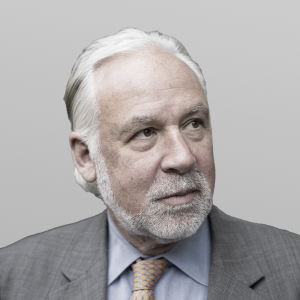
Paul Kusserow is a healthcare executive and turnaround specialist who transformed Amedisys from a struggling company on the brink of collapse into one of the nation's leading home health and hospice providers. When he became CEO in 2014, he increased the company's market value sixfold while pioneering the shift from fee-for-service to value-based care in home health.
Background:
- Author of "Anatomy of a Turnaround"
- Formerly President/Vice Chairman at Alignment Healthcare
- Formerly SVP at Humana
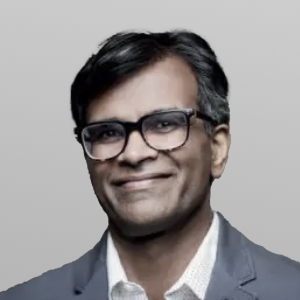
Sendhil Mullainathan is a behavioral economist and machine learning researcher whose work bridges human psychology and computational methods. He is best known for groundbreaking research showing how poverty impedes cognitive function, demonstrating that scarcity itself taxes mental bandwidth, and for pioneering work on algorithmic bias in health care.
Background:
- MacArthur "Genius Grant" recipient
- Co-founder of J-PAL (Abdul Latif Jameel Poverty Action Lab)
- PhD, Harvard
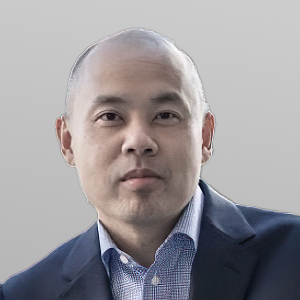
David Chan studies how information and workforce dynamics shape decision-making in health care, from why emergency room physicians order more expensive tests at shift's end to how physician team hierarchies affect patient care. His landmark study comparing VA and non-VA hospitals found that veterans taken by ambulance to VA facilities had 20% lower mortality rates, challenging conventional narratives about public versus private care.
Background:
- ASHEcon Medal (2023): top health economist under 40
- MD, UCLA, PhD, MIT
- Marshall Scholar at London School of Economics and Oxford

Jonas is a computer scientist and entrepreneur developing the next generation of healthcare AI tools and platforms, particularly with generative multimodal transformer architectures.
Background:
- Co-Founder and CTO of Knit Health (paused ABD computer science PhD at University of California, Berkeley)
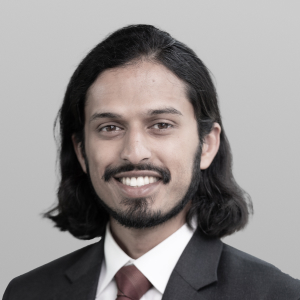
Advik uses behavioral economics to study clinician-AI integration, physician learning, and behavioral frictions in physician decision-making.
Background:
- PhD, MIT

Louis uses behavioral economics to study clinician-AI integration, physician learning, and behavioral frictions in physician decision-making.

Jessie uses large-scale healthcare data to study economic and policy questions, with interests in system efficiency, decision-making, and policy design.